
There has been a wave of remakes and reboots in recent years, giving both longtime fans and newcomers the chance to experience classic games all over again. I’ve loved seeing forgotten franchises get a second chance, but it’s also made me think about the series that are still waiting for their moment. Narrowing this list down wasn’t easy, but these are the games I’d most love to see return on modern platforms.
Shadow Hearts
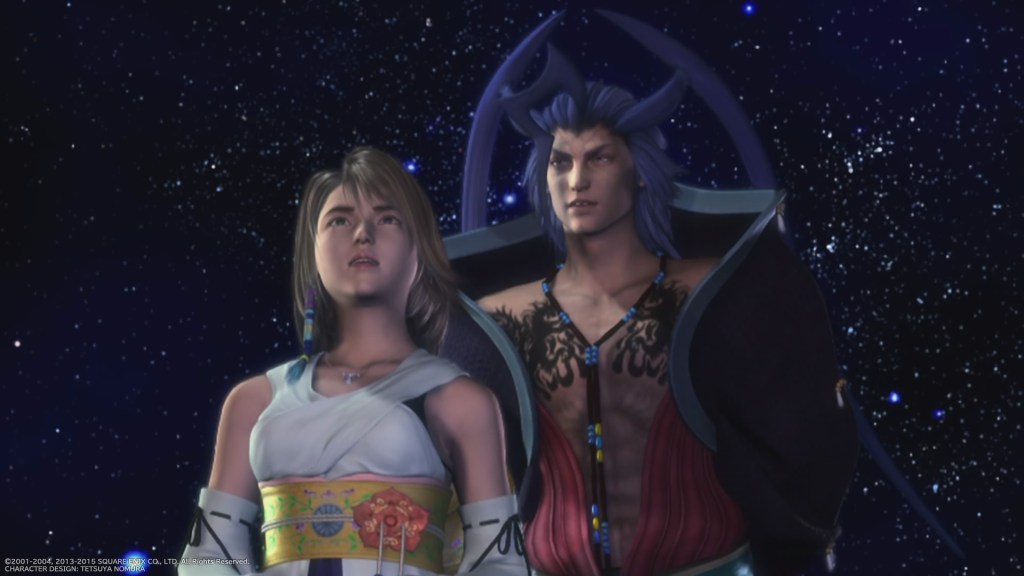
Shadow Hearts is one of those PS2 series that deserve a much bigger audience. It’s the kind of game that stays with you long after you’ve finished it, thanks to its unforgettable characters, bizarre humor, and emotional storytelling.
The series is filled with moments that left me either laughing or staring at the screen in disbelief. Whether it was meeting the Grand Papillon, Frank the American ninja, Li Li’s tragic yet hilarious story, or Margarete’s infamous pink underwear, Shadow Hearts constantly balanced comedy with darker themes.
The gameplay was equally memorable. The Judgment Ring added a unique level of interaction to every battle, and once I mastered its timing, combat became incredibly satisfying.
What truly made the series special, though, was its cast. Yuri and Alice remain one of my favorite RPG couples, rivaling many of the romances found throughout other JRPGS. Watching their relationship develop was one of the emotional highlights of the games, and Yuri’s struggle with grief resonates with me even more today after losing my own father.
I genuinely love this series and would jump at the chance to adventure with Yuri and the gang again. And maybe, just maybe, we could finally find out if Halley ever found his father in America.
Shining Force
Shining Force is the series that introduced me to tactical RPGs long before I became a fan of Fire Emblem. While its story began fairly simple, each sequel expanded upon its world and characters in meaningful ways.
What truly hooked me was the gameplay. Battles could last hours because I was constantly calculating enemy movement, positioning my party carefully, and squeezing out every bit of experience before advancing to the next objective. It was both frustrating and incredibly rewarding.
The cast was another strength. Every character had their own abilities and personality, making it easy to find favorites. Of course, I usually ended up trying to level everyone equally before promoting them, which only made battles even longer.
Although the series experimented with different genres over the years, Shining Force III on the Sega Saturn was really the last true entry before the franchise faded away, aside from a few PS2 and Game Boy Advance titles.
With Fire Emblem proving there’s still a huge audience for tactical RPGs, now feels like the perfect time for Sega to bring Shining Force back. The series helped define the genre, and it deserves another chance to remind players why it was so beloved.
Skies of Arcadia
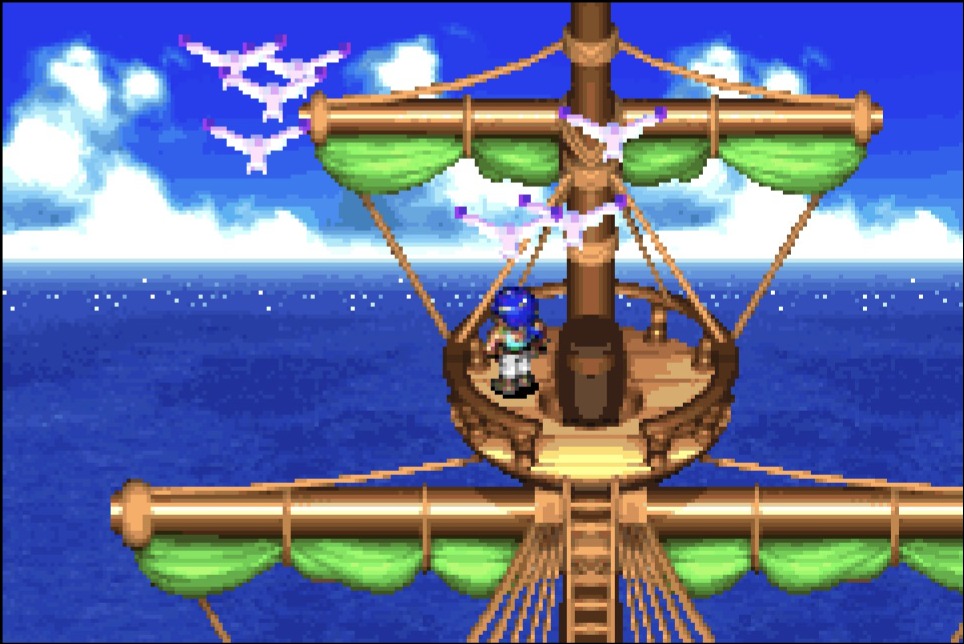
Few RPGs have captured the thrill of being an air pirate quite like Skies of Arcadia. Even today, I struggle to think of another game that delivers the same sense of adventure.
One of my favorite mechanics was exploring the skies in search of hidden discoveries, landmarks, and ruins. It could be frustrating to comb every corner of the map while constantly fighting random encounters, but finally uncovering a new location made the effort worthwhile. Better yet, once discovered, those locations became easy to revisit.
The airship battles were another standout feature. They transformed major boss fights into large-scale naval encounters where recruiting crew members and upgrading your ship became just as important as leveling your party.
The GameCube version added new content, including additional discoveries and competition from rival treasure hunters, making it feel fresh even for returning players.
I’d love to see this classic make a comeback. After all, blue rogues are forever.
Eternal Darkness: Sanity’s Requiem
Eternal Darkness: Sanity’s Requiem is one of the greatest survival horror games I’ve ever played and the title that expanded my love of the genre beyond Resident Evil.
Rather than relying solely on monsters and jump scares, the game explored the psychological effects of encountering ancient evil. Every playable character had a sanity meter that dramatically altered the experience. As sanity declined, reality itself became increasingly unreliable, making exploration far more unnerving than simply fighting enemies.
The varying sanity levels among the game’s many protagonists added another layer of challenge. Some characters could withstand the horrors better than others, forcing me to constantly adapt throughout the adventure.
This was easily one of the scariest games on the GameCube alongside the remake of the original Resident Evil. From the opening moments, it kept me on edge.
The game’s most famous trick remains unforgettable. At one point, it appeared to erase my GameCube save data. I panicked and immediately shut off my console, only to discover later that it had all been an illusion. Unfortunately, I’d already lost progress because I had turned the system off myself. Even so, I couldn’t help but admire how convincingly the game had fooled me.
My biggest disappointment is that it never received the sequel its ending seemed to promise. I still believe Eternal Darkness could become an outstanding modern horror franchise if it were given another chance.
Wild Arms
Wild Arms has always been one of the most unique RPG series I’ve played. Its blend of Western themes, fantasy magic, and science fiction shouldn’t work on paper, but somehow it all comes together beautifully.
Like Final Fantasy, every installment tells a new story with a different cast, making it easy to jump into the series at almost any point. While the battle system shares similarities with other classic JRPGs, the setting gives the games an identity all their own.
My personal favorites are Wild Arms 2, 4, and 5, although I genuinely enjoy every entry.
The series offers memorable characters, emotional stories, giant mechs, and enough strange plot twists to constantly keep players guessing. It’s unlike anything else in the genre, and I think modern JRPG fans would appreciate just how distinctive it still feels.
Few series have ever blended so many different influences so successfully. It’s time for Wild Arms to shine again.
Galerians
Science fiction horror has always been one of my favorite genres. There’s something deeply unsettling about humanity creating the very thing that leads to its own destruction.
That’s exactly why Galerians immediately captured my attention. It reminded me of I Have No Mouth, and I Must Scream, with humanity suffering at the hands of intelligence it created.
In Galerians, the supercomputer Dorothy learns about God and decides to become one itself by creating the Galerians, setting humanity on the path toward extinction. The only hope for the future rests with Lilia and protagonist Rion.
What separates Galerians from most survival horror games is its combat. Instead of relying on traditional weapons, Rion battles enemies using a variety of psychic abilities, giving the gameplay a unique identity.
It’s an ambitious and memorable game that deserves another chance. And with the rapid rise of artificial intelligence in the real world, its themes feel even more relevant today. Hopefully, our future never includes a real-life Dorothy.
Golden Sun
I can confidently say that Golden Sun is the series I’ve played the most on both the Game Boy Advance and the Nintendo DS. There’s just something about these games that keeps drawing me back. Part of that is definitely because they were developed by Camelot Software Planning, the same studio behind the Shining series. I’ll admit I’m a little biased.
Unlike many traditional JRPGs, Golden Sun places a strong emphasis on finding Djinn, mystical creatures tied to the world’s four elemental powers. Some are easy to discover, while others are hidden behind challenging puzzles or well-kept secrets. Collecting more Djinn not only boosts your characters’ stats but also expands their Psynergy, essentially the game’s version of magic. One of my favorite aspects of the series is experimenting with different Djinn combinations, allowing me to customize each character’s stats, abilities, and class.
No matter how many times I replay it, Golden Sun never gets old. Every playthrough is just as enjoyable as the last. In fact, I’m currently finishing another run of the original game on the Nintendo Switch.
Golden Sun: Dark Dawn was released in 2010, and it’s still disappointing that the series hasn’t continued since then. I’d love to learn more about the Dark Adepts and see many of the returning characters from the previous games play a larger role in the story. There’s still so much potential left unexplored in the world of Golden Sun.
Parasite Eve
If you’ve been following this blog, you know that science fiction horror is one of my favorite genres. Parasite Eve blends horror and science fiction by grounding its story in a seemingly plausible scientific concept: mitochondria. What begins as the promise of medical advancement and healing quickly spirals into a nightmare, transforming a scientific breakthrough into a new level of hell.
The game’s premise is what makes it so memorable. It takes a real biological concept and twists it into something terrifying, creating a unique blend of body horror, suspense, and RPG gameplay that still stands out today. Even after all these years, I haven’t played another game that captures the same atmosphere or premise quite as well.
I love Parasite Eve so much that I tracked down the original novel by Hideaki Sena. Reading it only deepened my appreciation for both the series and the science fiction horror genre as a whole. The novel is outstanding, and once I started reading it, I couldn’t put it down. I also own the film adaptation, which is enjoyable in its own right, but I still prefer the novel.
Unfortunately, the series lost its way with The 3rd Birthday on the PSP. While it had interesting ideas, it was ultimately a disappointment, and I felt that Aya deserved a much better continuation of her story. I’m still hopeful that one day Parasite Eve will receive the same care and attention that Capcom has given the Resident Evil remakes. I’d love the chanceto see Aya return in a modern reimagining of one of my favorite games.
I know I left out plenty of deserving games. I wanted to focus on the ones I’ve spent years wishing would make a comeback. Trust me, there are many more franchises that deserve another chance.
I’d love to hear your thoughts. What games do you think deserve to return, whether as a sequel, reboot, or remake? Feel free to share your own wish list. I’m always interested in seeing which forgotten classics other gamers hope to see brought back.



Leave a Reply