
I never thought in a million years that picking up a little game called Resident Evil Director’s Cut for the original PlayStation would not only make me a lifelong fan of the series, but also a fan of the survival horror genre as a whole. I first heard about the game through reviews in GameFan, EGM, Official PlayStation Magazine, and several other gaming publications. The reviews were overwhelmingly positive, but survival horror was still a completely new concept to me. I loved horror movies, but the idea of actually playing through a horror experience seemed strange at the time. I honestly didn’t think I would enjoy it, but I decided to give it a chance. Thirty years later, I’m still a fan.
Now, with Resident Evil Requiem, those feelings of nostalgia are stronger than ever. Capcom understands how important the franchise’s legacy is to its fans, and it continues to find ways to recapture that magic through remakes, reimaginings, and new entries. Whether revisiting familiar locations or introducing new stories that connect the past to the future, the series has never forgotten what made players fall in love with it in the first place. Requiem brings back familiar faces, enemies, and locations while also introducing new characters I quickly grew attached to. While I wouldn’t rank it among the very best entries in the franchise, I still had a lot of fun with it and found plenty to enjoy.

The story connects elements from the original trilogy with the ongoing threat of the Connections, the mysterious organization first introduced in Resident Evil 7. This is the same group Lucas Baker was secretly working with during the events of that game, and its goals tie into Spencer’s long-running research. It’s why they need Grace and why they’ve spent years trying to uncover what makes her so important. I won’t go into too much detail to avoid spoilers, but I will say that the payoff surrounding Grace’s importance to the plot left me disappointed. The game spends a significant amount of time building up the mystery of why she matters, only for the answer to feel underwhelming and that she didn’t matter at all. By the end, it felt as though much of that buildup amounted to very little, which left a bitter taste in my mouth. Perhaps future DLC will expand on these ideas and make them feel more meaningful, but as it stands, the resolution didn’t work for me.
The cast introduces both new faces and returning characters from past games. At times, however, some of them felt like last-minute additions that contributed very little to the overall story. I wish the roster had been smaller, allowing each character more time to shine and play a more meaningful role. I had also hoped that the original S.T.A.R.S. team would be involved in this return to where it all began, or that fan favorites like Billy and Carlos would make an appearance. Unfortunately, neither happened. Still, I keep hoping that a future installment will bring back some of these characters. A girl can dream.
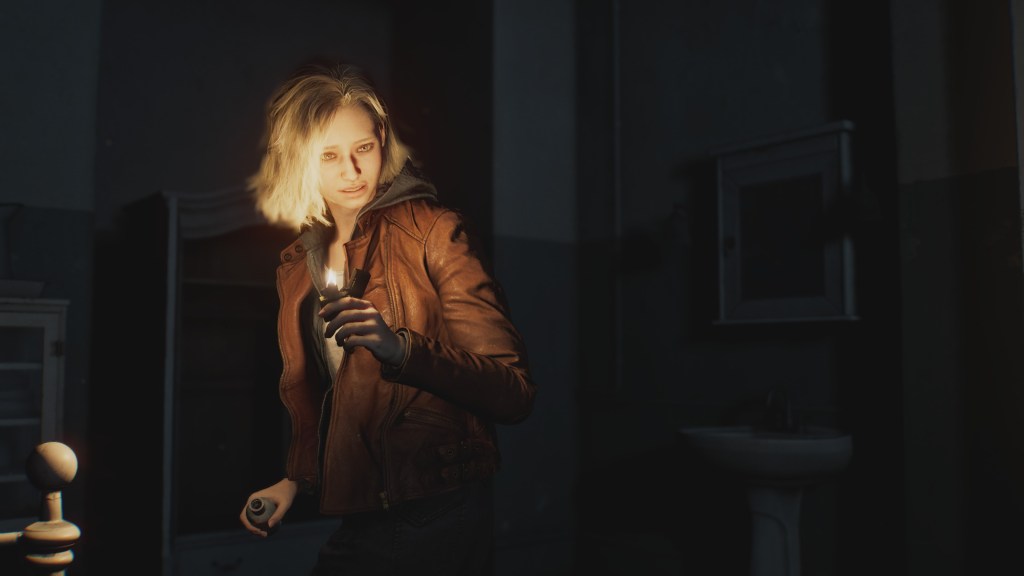
We are introduced to Grace, an FBI analyst who is drawn back to the same hotel where her mother died years earlier. After being kidnapped by a mysterious man, she is taken to the Rhodes Hill Chronic Care Center because of her connection to the events unfolding around her. From there, Grace begins a journey that transforms her from a frightened and reluctant survivor into someone capable of standing on her own. Grace’s character development is one of the game’s greatest strengths. Watching her overcome her fears and gradually gain confidence made her easy to root for throughout the adventure. By the end of the story, she had grown into a capable heroine and became one of the characters I cared about most. Her evolution was easily one of the highlights of the entire game.
Leon S. Kennedy is the second main character and the sole focus during the game’s return to Raccoon City. While Grace’s sections focus heavily on stealth and survival, Leon’s campaign embraces a far more aggressive approach. Once he arrives in Raccoon City, he feels less like the inexperienced rookie from Resident Evil 2 and more like a seasoned veteran capable of tearing through hordes of infected and powerful bio-weapons. The contrast between the two protagonists helps keep the gameplay fresh and highlights how much Leon has grown throughout the series.
I felt that once Leon returned to Raccoon City, the game became more of his personal mission, especially after discovering who his mysterious helper was and what was afflicting them both. You can tell Leon is still haunted by those he couldn’t save, such as Marvin, and returning to the city provides him with some much-needed closure.
Victor Gideon is the main villain of the story. He is responsible for bringing Grace to the Rhodes Hill Chronic Care Center after discovering that she might be immune to infection following a bite. Every time Victor appeared on screen, I found myself excited to see what he would do next. The only aspect of his character I disliked was his final form during the boss fight. I understand that the developers wanted to include a “greatest hits” collection of classic Resident Evil boss concepts, so turning him into a Nemesis-like monster made sense. However, he never truly stalks Leon throughout the game, which made the transformation feel less impactful. Given his connections to Spencer, it felt as though his role was building toward something much larger. Instead, his potential never fully materialized.
Zeno is honestly one of the most disappointing characters in the game. He feels like he exists solely to provide a connection to another villain, but beyond that, he contributes very little to the story. I initially thought he would become Leon’s stalker-type antagonist, especially after seeing how effortlessly he dealt with the BSAA. As I explored Raccoon City on the way to the RPD, I kept expecting him to emerge as a significant threat. I even thought he might become Leon’s recurring nemesis in the same way Wesker became Chris’s. Instead, he feels underutilized and ultimately serves little purpose beyond reminding players about the Connections. It was a wasted opportunity.
Emily is a young girl whom Grace meets while searching for a way to escape the Rhodes Hill Chronic Care Center. She is locked inside a cell for reasons that are initially unclear, and a dying man warns Grace not to let her out. Naturally, this leaves both Grace and the player wondering why, and the answer does not become apparent until much later in the story.
In many ways, Emily serves a role similar to Sherry’s relationship with Claire in Resident Evil 2. She is a vulnerable child in need of protection, but her time spent with Grace ultimately helps shape both of them. Emily is blind due to cataracts, yet her ability to read Braille becomes crucial to their escape from the hospital. Her past is deeply intertwined with Grace’s story and the horrific legacy left behind by both Umbrella and the Connections.
What happens to Emily throughout the game is both tragic and heartbreaking, though there is also a sense of hope depending on the choices you make. I thought she was an excellent addition to the story, giving Grace a greater sense of purpose and the courage to push forward through the horrors surrounding her.
Alyssa Ashcroft makes a surprising appearance as Grace’s mother. Fans last saw her in Resident Evil Outbreak, where she was one of several survivors attempting to escape Raccoon City. It remains unclear whether Alyssa or the other Outbreak survivors suffer from the same affliction that Leon does, as none of her scenes provide any clear indication one way or the other. I also found myself wondering whether she remained in contact with any of the other survivors after the events of Outbreak.
Although Alyssa’s role is relatively small, she adds a tremendous amount to Grace’s story and helps strengthen the emotional core of the narrative. Her appearances may be brief, but they leave a lasting impact. I only wish we had seen more of her, and I’m hopeful that future DLC will give her a larger role to play.
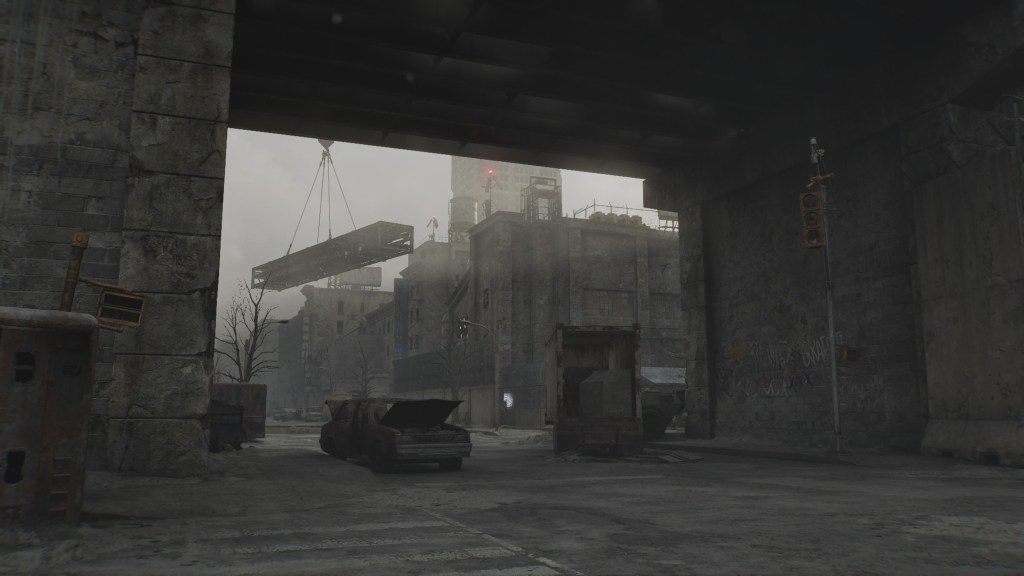
This game takes players through several distinct locations, including a surprising return to Raccoon City. Each area was enjoyable to explore, offering plenty of hidden items and secrets to discover while constantly trying to avoid the undead and other horrifying creatures lurking around every corner.
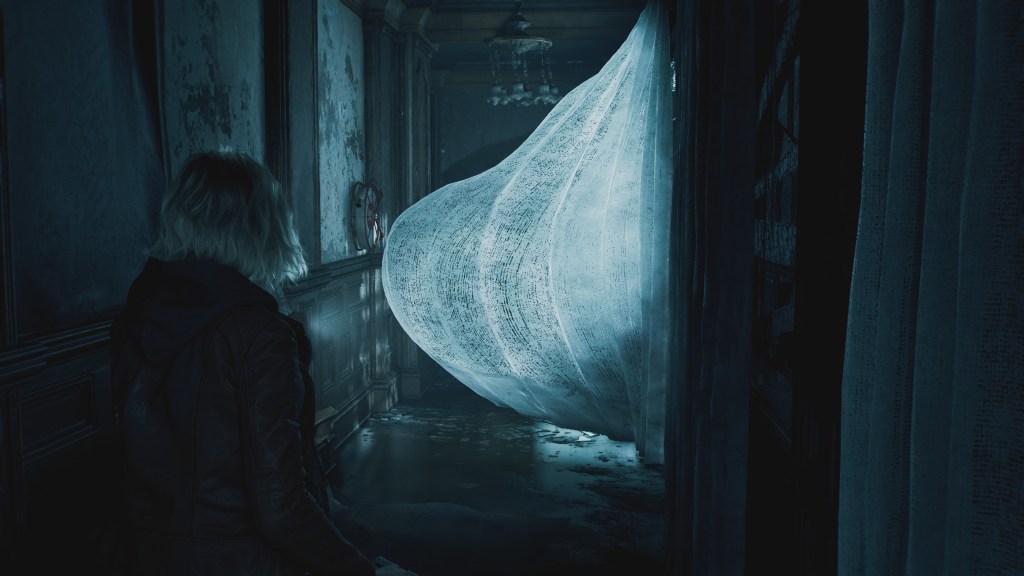
The Rhodes Hill Chronic Care Center serves as the primary setting for the first half of the game, and it stands out as one of the best locations in the entire experience. I never truly felt safe while exploring its halls, always expecting something or someone to appear unexpectedly. The enemies were a refreshing change from the usual zombies, as many still retained traces of their humanity. It also added a layer of tragedy, as several infected patients appeared to have pre-existing mental health conditions that were amplified by the virus.
I had a blast exploring Rhodes Hill because each infected enemy felt unique. Some were genuinely unsettling, while others inspired a strange sense of sympathy. One memorable example was Chunk and his brother, whose uncontrollable hunger stemmed from polyphagia. While Chunk was largely harmless if left alone, his brother became the focus of a tense boss encounter that had me constantly running for my life as he attempted to devour Leon throughout the fight.
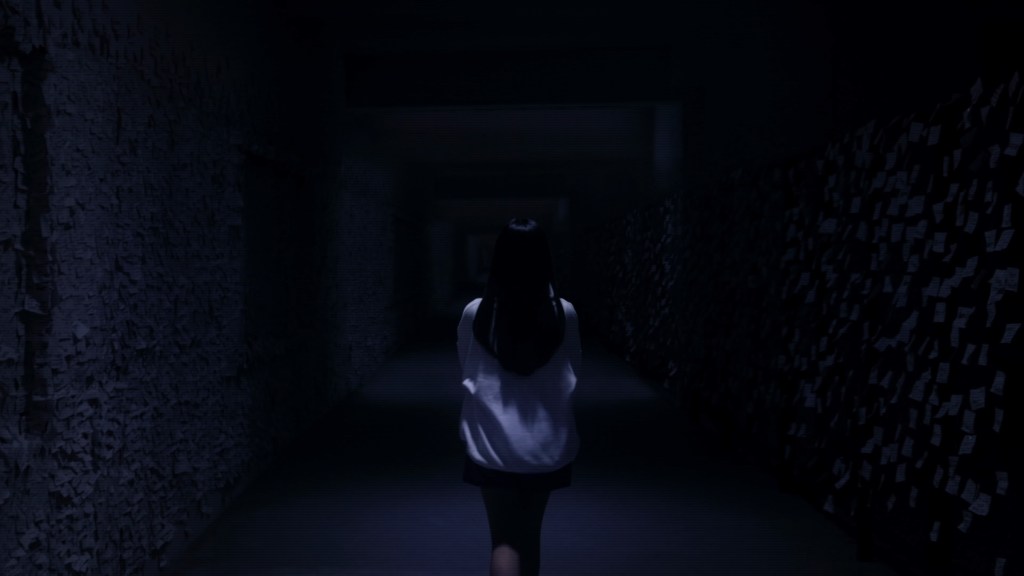
Grace also has her own stalker enemy simply known as “The Girl,” who is introduced fairly early in the game. She is genuinely creepy and menacing, and I was almost as terrified of her as Grace was. One of the most intense moments occurs in the underground section while attempting to rescue Emily. The area is filled with zombie prisoners either trapped in cages or wandering freely in search of their next meal, while The Girl constantly appears and disappears like a jack-in-the-box. Trying to collect the three plugs needed to progress while avoiding both the prisoners and The Girl created one of the most suspenseful sequences in the game.
Returning to Raccoon City was another highlight of the game. Seeing the aftermath of the missile strike was both haunting and fascinating, as the city had been reduced to little more than dust, rubble, and scattered remnants of its former self. Exploring the ruins and revisiting familiar locations created a strong sense of nostalgia while also emphasizing the sheer scale of the destruction. I still do not understand how anything managed to survive the blast, but somehow it did.
Most of the enemies encountered in this section are zombies that wield various weapons, including chainsaws. If you time it just right, you can end up with dual chainsaws, which was something I was surprisingly delighted to pull off. Despite those moments, the area felt somewhat underwhelming compared to Rhodes Hill. Even the zombified BSAA agents failed to leave much of an impression. After the initial excitement of returning to Raccoon City wore off, the gameplay began to feel like any other section in the series rather than a truly memorable revisit to one of Resident Evil’s most iconic locations.
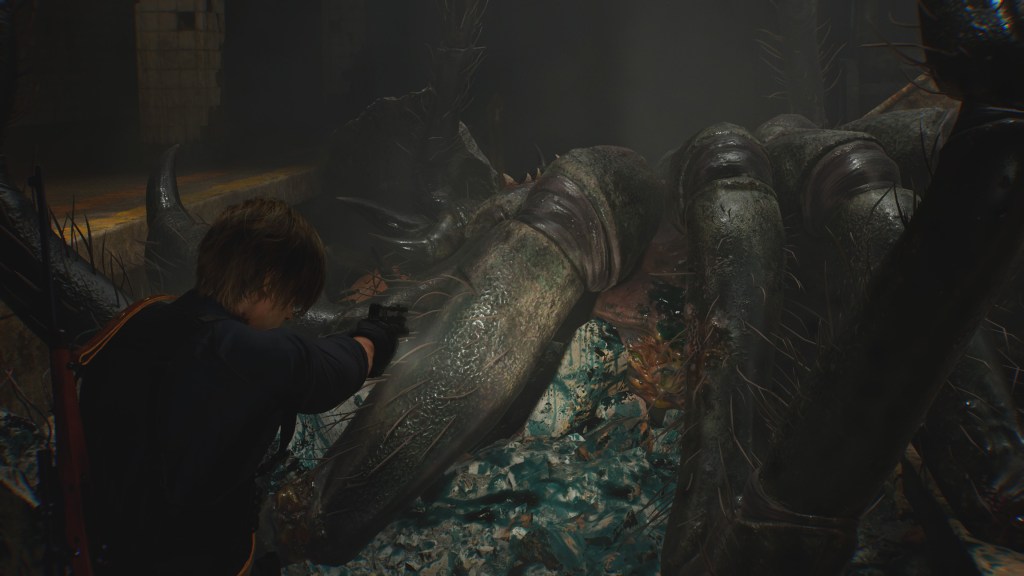
This section also marks the beginning of Leon’s boss rush, as the series’ greatest hits return for one final encore. My guess is that the Connections decided to recreate certain bosses so Leon could experience the same encounters that Chris and Jill faced in the original Resident Evil and Resident Evil 3: Nemesis.
Personally, I did not care much for the boss rush. I understand that it is meant to break up the pacing and reinforce why returning to Raccoon City is such a nightmare, but the execution felt excessive. Once we arrive in the city, we are almost immediately thrown into a boss fight against Black Lightning. After that, we spend a long stretch fighting different zombie variants before finally encountering the second major boss during the RPD section. The pacing made the boss encounters feel less impactful and more like obstacles placed at regular intervals.
The RPD section was a nice return, even if the areas we could explore were fairly limited. It was fun revisiting the old S.T.A.R.S. office and discovering Barry’s note about going on a hunt for zoo tickets. That little detail made me smile, especially when I spotted the old PlayStation sitting in one of the lockers. Moments like that helped make the return feel worthwhile.
One thing that felt strange was Zeno taunting Leon about not being able to save anyone. The line did not really land because I kept wondering how Zeno would even know enough about Leon’s past to make that accusation. It came across as forced rather than meaningful.
The return of Mr. X also felt like a missed opportunity. Instead of serving as a persistent threat, his appearance largely turned into a game of chicken that quickly transitioned into a boss fight once Leon left the RPD. I would have preferred to see him stalk Leon throughout a larger portion of the police station, creating the same tension that made him so memorable in previous games. Given how limited the explorable sections of the RPD were, though, that was probably not practical. Even so, his brief appearance felt more like fan service than a meaningful gameplay element.
The Orphanage section, however, was easily my least favorite part of the game. It felt unnecessary and could have been condensed into a cutscene or optional sequence. Beyond connecting the story to the Resident Evil 2 remake and further demonstrating the organization’s cruelty, it added very little to the overall narrative. Unfortunately, this section disrupted the pacing and failed to be as engaging as the rest of the game.
The Underground section introduces Plant 42, which becomes one of the area’s biggest annoyances while making your way toward the laboratory. Its tendrils stretch throughout the environment and can damage you if you’re not paying attention. While the encounter adds tension, I would have preferred to see the return of Ivy zombies or entirely new plant-based creatures. Either option would have fit perfectly within the setting and added more variety to the enemy roster. Overall, Plant 42 felt more frustrating than challenging.
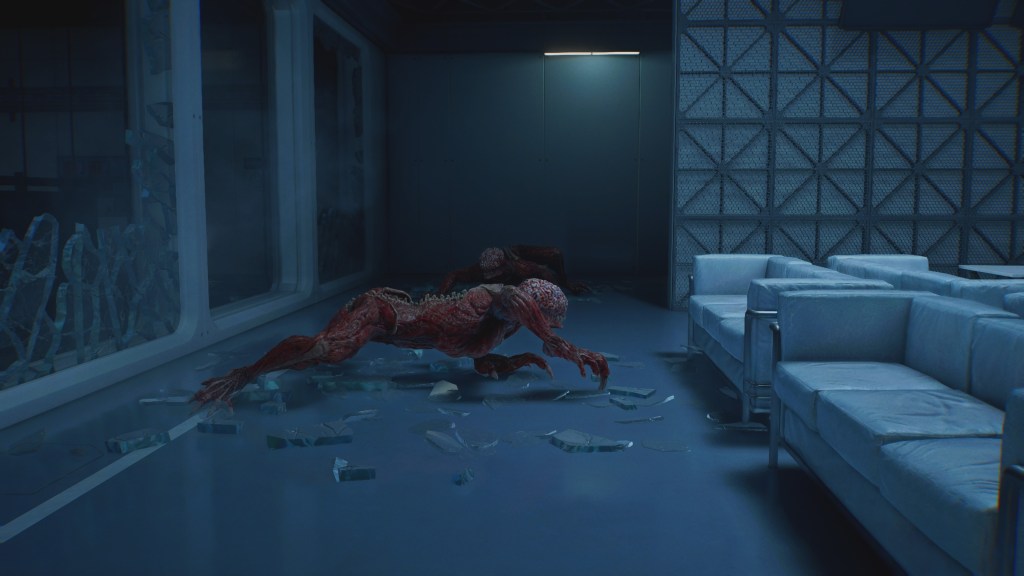
The Lab section is the final area of the game that I truly enjoyed. Connected to the Orphanage and separate from Umbrella’s main laboratory from Resident Evil 2, it serves as a satisfying conclusion to the adventure. Exploring the facility as both Grace and Leon was a lot of fun.
Grace’s objective involves opening the way forward for Leon, forcing her to battle lickers and zombies while solving puzzles and exploring the facility. Leon’s section, on the other hand, feels like an action movie. He battles seemingly everything the game can throw at him, including members of HUNK’s team, before eventually facing HUNK himself in a hatchet duel.
I hated that boss fight. Since I primarily used the hatchet to split zombie skulls open throughout the game, I never spent much time learning the defensive mechanics. It honestly felt as though the game knew that and decided to punish me for it. I eventually defeated HUNK, but it took several attempts.
Victor’s final boss fight was also frustrating during its second phase because it required precise defensive timing, an area where I clearly needed more practice. Despite that, it still delivered a satisfying conclusion to the story.
The weapon selection was one of the more enjoyable aspects of the game, especially for Leon. He has access to a wide variety of firearms, many of which can be upgraded throughout the adventure. I enjoyed collecting them all and figuring out which ones best suited my playstyle. My personal favorites were the 990-TAC shotgun, the Classic 70, and the Marksman 1A rifle. Those weapons rarely left my inventory, alongside my reliable suppressed handgun.
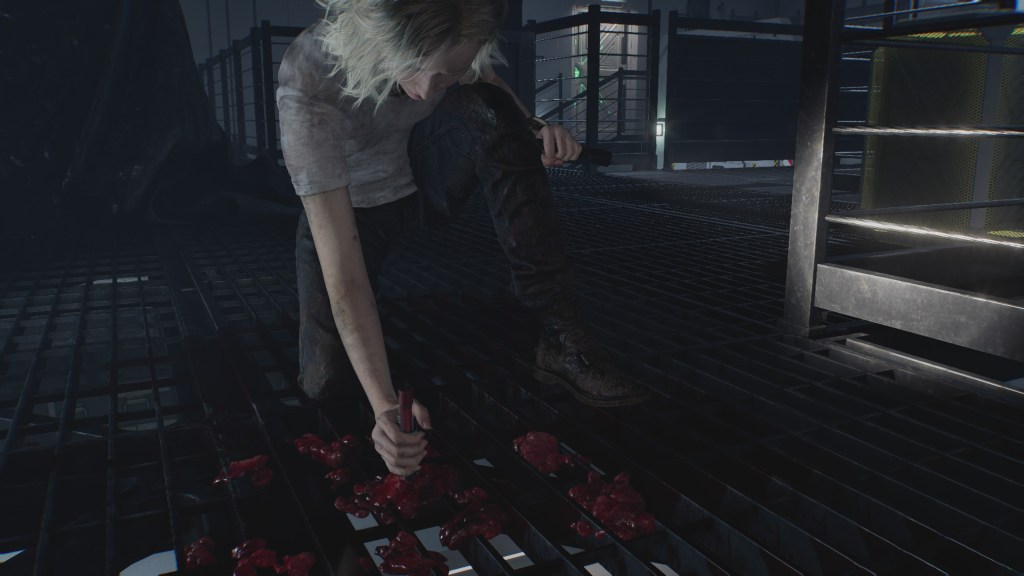
Grace’s arsenal is much more unique. She begins the game with Leon’s Requiem Magnum before eventually acquiring one of her own. Her most distinctive tool, however, is a syringe that allows her to collect infected blood and craft a variety of useful items. These include special injections such as Steroids and Stabilizers, which enhance her abilities, as well as ammunition and my personal favorite, Hemolytic Injectors, which can instantly kill certain enemies.
To craft these items, players must locate Empty Injectors scattered throughout the game world. Leon also has access to a crafting system, though his is more traditional. He collects scraps and other materials, and can even break down items such as knives to obtain additional crafting resources.
The only downside for me was figuring out what resources were worth crafting during my first playthrough. More than once, I found myself running low on ammunition because I had spent materials on less useful items. It became much easier to manage once I better understood the crafting system, but there was definitely a learning curve early on.
Resident Evil Requiem is not a perfect entry in the franchise. The story’s central mystery ultimately fails to deliver a satisfying payoff, several supporting characters feel underutilized, and certain sections drag on longer than necessary. Despite those flaws, I still had a great time with the game. Grace develops into a compelling protagonist, Leon’s return to Raccoon City provides some of the game’s most memorable moments, and the various locations are packed with atmosphere, exploration, and classic Resident Evil charm.
While I would not place Requiem among the very best games in the series, it succeeds in honoring the franchise’s legacy while continuing to move the story forward. As someone who has been a fan for nearly thirty years, I walked away not super thrilled but I am excited to see where the series goes next. Resident Evil Requiem may not reinvent survival horror, but it serves as another strong reminder of why I continue to love this franchise after all these years.






Leave a Reply